

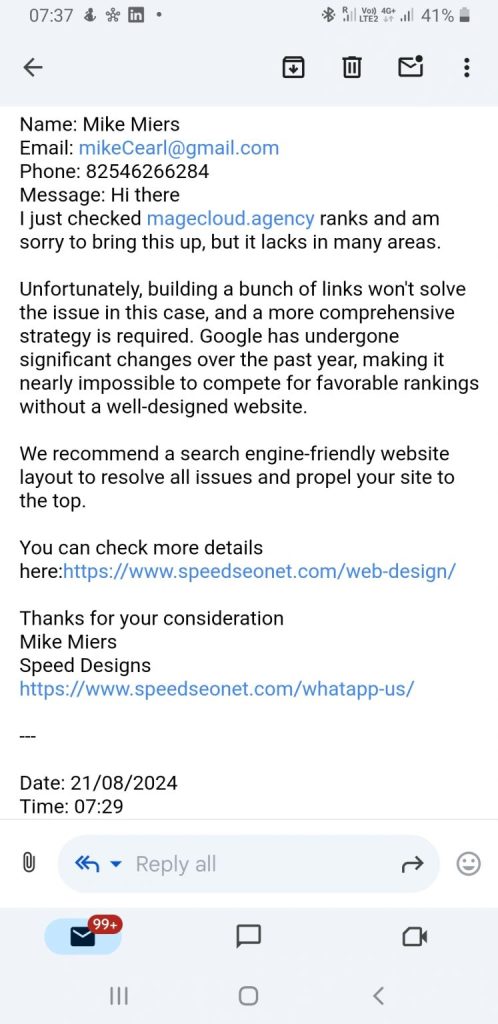
You just received an email from someone claiming that your website speed is bad, that you are losing positions in Google, that your links do not work, and all sorts of other alarming things. Everyone with a published email address gets these, and almost everyone deletes them on sight. Mostly that instinct is right. But there is a sixty-second test that sorts the noise from the occasional real signal, and it has the advantage of being genuinely satisfying to run.
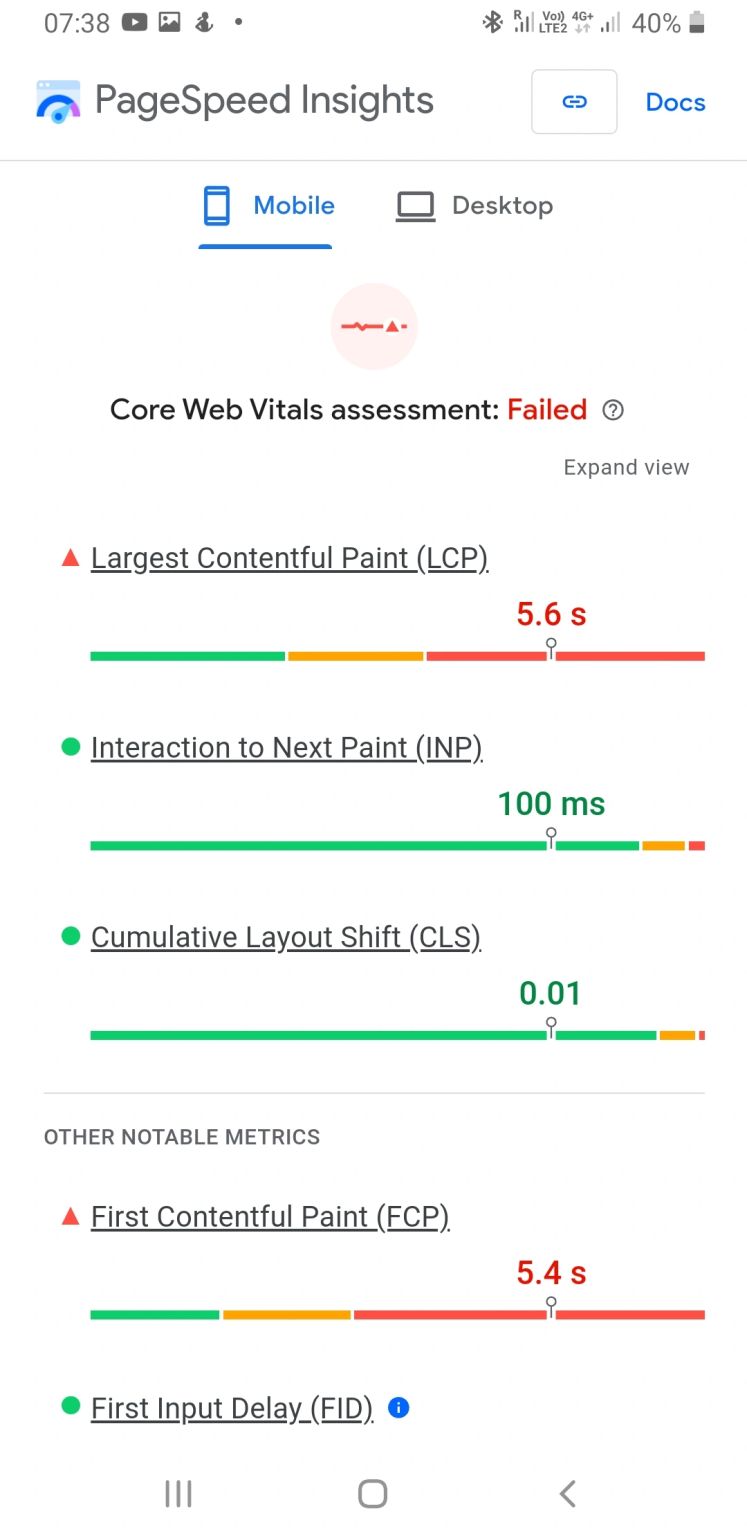
Instead of just deleting the email, grab the URL of the sender’s own website. Go to Google PageSpeed Insights, paste their link in, and scan it. You are not testing your site. You are testing theirs, against the exact standard they just lectured you about.
MageCloud Inbox Triage Note
The Sixty-Second Vendor Test
THE TEST
PageSpeed their own site
Someone selling speed optimisation should pass Google Core Web Vitals on their own domain. It is the one site they control completely.
IF THEY PASS
Possibly legitimate
A sender whose own site passes, the way magecloud.agency does, has at least demonstrated they practise what they pitch. Worth thirty more seconds of your attention.
IF THEY FAIL
Mark as spam and move on
A vendor whose own site fails the standard they are selling has told you everything. Junk folder, unsubscribe, done.
Paul Ryazanov · MageCloud · we pass our own test, which is the point
Why This Test Works When It Has No Right To
The test sounds almost too cheap to mean anything, so it is worth spelling out why it filters so well. The cold-email SEO industry runs on volume. The same template goes to fifty thousand inboxes, the claims are generated rather than diagnosed, and the operation’s economics depend on never spending real engineering time on anything, including their own website. That is precisely why their own site fails. Caring about their own Core Web Vitals would require exactly the discipline their business model does not have.
A practitioner who actually does performance work lives on the other side of that line. Their site is their portfolio, the one domain where they answer to nobody. When you find a sender who passes cleanly, you have found someone who at least spends their own money on what they sell. It does not make their pitch correct, your site may not need anything they offer, but it moves them out of the bin and into the category of humans worth a reply. The test works because it measures the one thing cold email cannot fake: whether the sender’s claimed expertise shows up where it costs them something.
The Same Move Works on Every Cold Pitch
PageSpeed is the cleanest version of this test, but the underlying move generalises to most unsolicited expertise. An email about your broken links: crawl the sender’s site and count theirs. A pitch about your SEO: search their company name and see what Google thinks of them, or run their domain through the same site: index check I recommend for verifying agency link work. A design agency with a cluttered site, a conversion consultancy whose own form is broken. Hold every vendor to their own standard first. It is the fastest due diligence that exists, and it requires no expertise beyond the willingness to look.
I keep writing about this from different angles because the inbox is genuinely a hard place to triage. I have argued before that the spam-looking site audit email is occasionally the one that saves your business, and I stand by it: I read every one we get. Reading everything and trusting nothing are compatible positions. The PageSpeed test is how you do both in under a minute.
What Passing Looks Like, Since We Are Naming Standards
If you run magecloud.agency through PageSpeed Insights, it passes Google Core Web Vitals, and that is not an accident or a flex. It is maintenance, the same unglamorous attention to template weight, image sizing, and script discipline we apply to client stores. The screenshot below is exactly that result, because if I am going to hand you a test for judging vendors, I should be able to survive it myself.
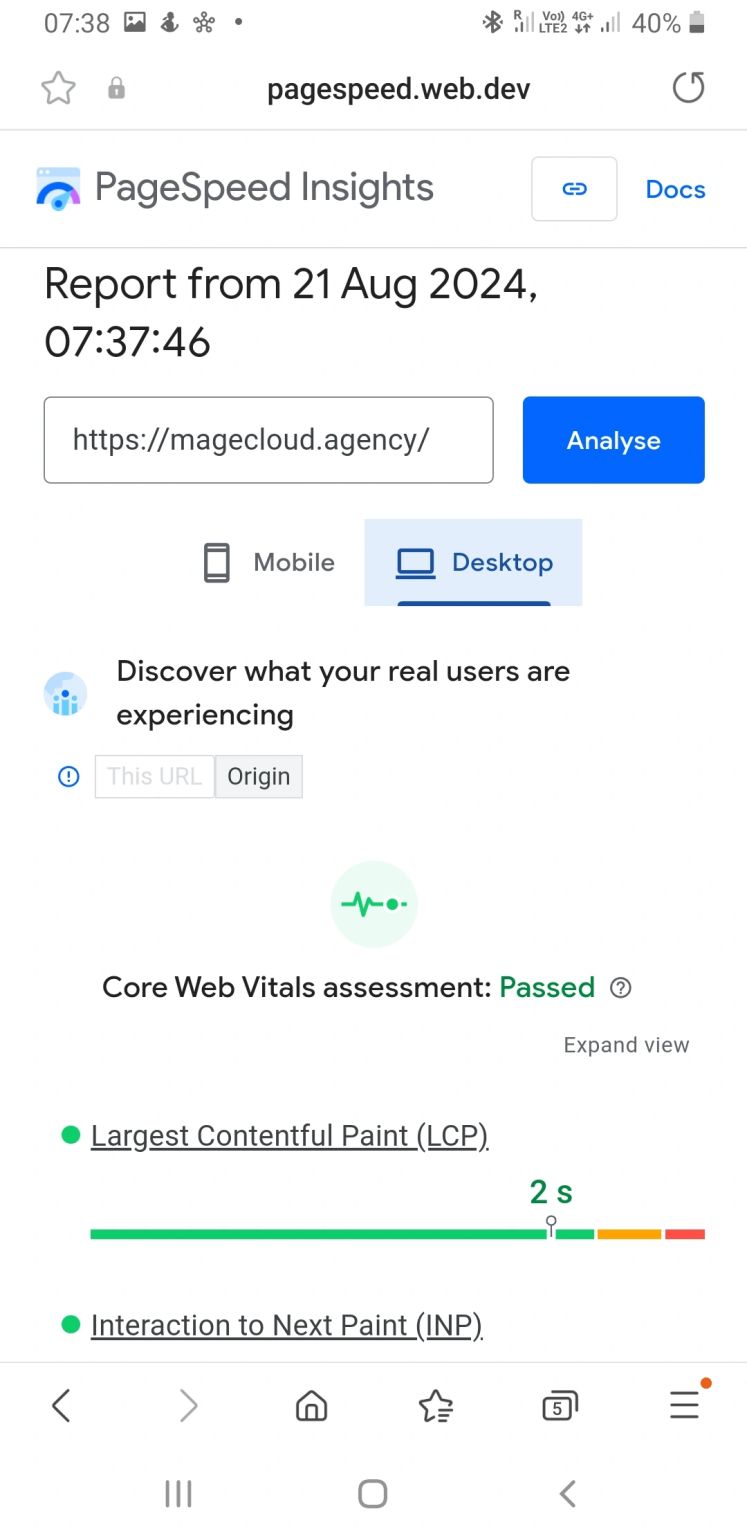
That is the standard to hold anyone to who emails you about performance. Not perfection on every metric, real sites have real trade-offs, but a passing grade on the assessment their own pitch invokes. Sauce for the goose. If their site fails it, mark the email as spam, unsubscribe, or move it to junk with a clear conscience. You have not missed an opportunity. You have declined an invoice.
The Inbox Rule to Keep
Keep the rule small enough to actually use: never act on an unsolicited claim about your website without first applying the claim to the sender. Sixty seconds, one paste, and the email sorts itself. The rare sender who passes earns a look at what they found, ideally verified the same way you would verify any audit. The rest earn the junk folder they were always headed for. And if an email like this has flagged something on your store that you cannot tell is real, get in touch. I will run the honest version of the diagnosis and tell you if the scary claim was the one true thing in the message.
Related reading: The SEO Cold Email That Audited Itself. The sauce-for-the-goose test applied to a pitch that quoted my own domain rating.