

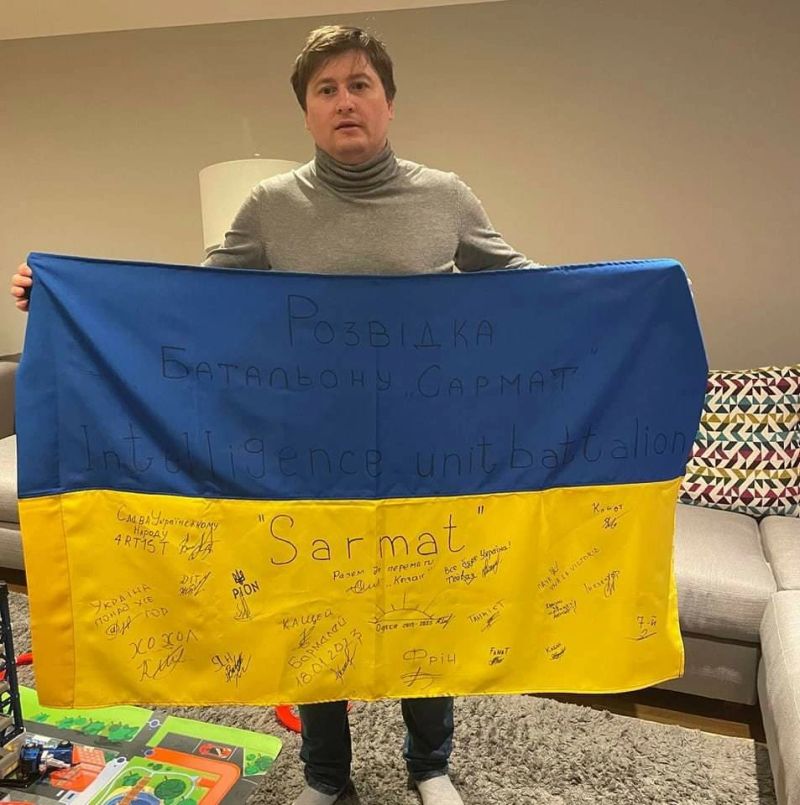
A few years ago, I could not imagine being in the UK. The plan looked completely different. We had just invested about 400K into our own office space in Ivano-Frankivsk, a real headquarters for a company that had earned one. We had outperformed year after year, delivering top-quality service for more than 100 brands worldwide. Revenue was around 2.5M annually. The next chapter was supposed to be written in that office.
The war rewrote it. I am writing this from the UK, and the company that was built around one building in western Ukraine now works from thirteen different locations: Dnipro, Ivano-Frankivsk, Mukachevo, and Chernivtsi in Ukraine. Warsaw in Poland. Iași and Rădăuți in Romania. Chester in the UK. Tàrrega and Torrevieja in Spain. Vienna, Prague, and Hendaye across Austria, the Czech Republic, and France. Same team, same clients, same standards, thirteen cities.
MageCloud Team Note
The Company, Before and Now
WHAT WE BUILT
400K office, 100+ brands, 2.5M revenue
A decade of work compressed into three numbers. The office in Ivano-Frankivsk was the proof we had made it the conventional way.
WHAT WE BECAME
One team across thirteen locations
Four cities in Ukraine and nine across Europe. The structure nobody would design on purpose, run every day because it has to be.
WHO IS MISSING FROM THE STANDUPS
Four teammates on the front line
Four of our people are protecting us and the entire country directly. They are part of every number in this article.
Paul Ryazanov · MageCloud · we are brave, we are smart, we are Ukrainians
What Clients Saw, Which Was Almost Nothing
Here is the part I am most proud of, and the part that still surprises people when I say it plainly: through the relocations, the blackouts, the air-raid alerts, and the rebuilding of an entire company’s geography, client work continued. Stores stayed supported. Projects shipped. The brands we serve, more than a hundred of them, mostly experienced the largest disruption in our company’s history as a quiet period where their tickets kept getting closed.
That did not happen by luck. It happened because the things that make a team resilient turned out to be the same unglamorous practices I have always pushed: documented systems, infrastructure that lives in the client’s accounts rather than ours, more than one person able to pick up any given thread, and a culture where people take ownership without being watched. We built those habits for ordinary reasons, redundancy against holidays and hard drives. They held against a war. Diversifying your risks is not a theoretical exercise at this company. It is the reason the company still exists.
What Thirteen Locations Taught Me About Teams
I will not pretend distributed work across thirteen cities is effortless. Time zones are mild, mostly one or two hours apart, but the loss of one shared room is real, and we had loved that room. We bought it. The adjustment was cultural more than technical: trusting output over presence, writing things down that used to travel by desk-side conversation, holding the team together with intention instead of architecture.
What made it work is the thing I have said about Ukrainian engineers in every context for ten years, and which the whole world has now seen demonstrated at scale. The people I work with do not wait for conditions to be right. They work from corridors during alerts, from new cities weeks after relocating, from borrowed desks in countries they did not plan to live in. Imagine having such talented individuals working for you, and then imagine what it does to a founder’s sense of obligation. You do not get to have a bad quarter of leadership in front of people like that. The standard they set under the worst conditions of their lives became the standard the company answers to, in every city, permanently.
The Four Who Are Not on the Team Calls
Four of our teammates are protecting us and the entire country directly on the front line. I want them in this article as more than a statistic, because inside the company they are not one. They are specific people whose work other people now carry, whose names come up in planning conversations, whose places are held. Everything the rest of us do, the projects, the clients, the revenue, happens under the protection of what they and millions of others are doing.
There is no business lesson in that paragraph and I am not going to manufacture one. It is simply the truth of how this company runs now, and any honest description of MageCloud has to include it. We are brave. We are smart. We are Ukrainians.
The Plan Versus the Company
The office in Ivano-Frankivsk was the plan. The thirteen cities are the company. I have stopped thinking of the second as a degraded version of the first. A team that can deliver for a hundred brands while its country is under attack is not a company that lost its building. It is a company that found out what it was made of, and the answer was better than the plan.
If you are a founder reading this while your own carefully built structure is being rearranged by something you did not choose, the only thing I can offer from experience is that the structure was never the company. The people and the habits are. Build both like they will be tested, because one day they will be. And if you want to work with the team this article is about, get in touch. They are very good. They have proved it in ways no case study can.
Related reading: My Developer Replied From a Basement in 24 Minutes. The single text exchange that says everything thirteen cities of structure was built to protect.