

Quite often I see posts from other business owners with the same advice: only spend time on clients who are willing to pay and have the money. Pre-screen them. Be direct. Protect your calendar. And I generally agree with it, because your time is the most valuable thing you have, time you could be spending with friends, family, or doing what you love. An agency that lets anyone book an hour of its senior people is an agency subsidising tyre-kickers with its payroll.
But I still remember my time in Silicon Valley, and the memory will not let me follow the advice all the way. There, I had meetings with people who had built successful companies, made millions, and exited. By every pre-screening rule in the playbook, I should never have made it onto their calendars. I was not a customer, not a partner, not useful. They met me anyway, answered my questions, and gave me feedback that ultimately helped me build my own product, brand, and company. Somebody with nothing to gain decided I was worth twenty minutes, more than once, and those minutes compounded into everything that followed.
MageCloud Giving Back Note
How I Square Protecting Time With Giving It
THE RULE I KEEP
Pre-screen the engagements, not the humans
Paid work gets full qualification. But a few minutes for someone hustling to make a change is a different budget line, and I fund it deliberately.
WHERE IT CAME FROM
Silicon Valley founders who owed me nothing
People who had built and exited companies took my questions seriously when I was nobody. The debt transfers forward, not back.
WHAT IT RETURNS
Reputation, reviews, and reach
After every session I send one link and ask for an honest review. Value first, ask second. The compounding takes care of itself.
Paul Ryazanov · MageCloud · the audit that costs nothing still has to be earned
The Asymmetry That Makes Giving Back Rational
Strip the sentiment out for a moment and the maths still works. A few minutes answering an email from someone seeking an audit costs me almost nothing, a coffee’s worth of attention between calls. For the person on the other end, the same minutes can be the difference between months of wrong direction and a corrected course, exactly as they once were for me. Value delivered divided by cost incurred approaches the best ratio available anywhere in my week. Nothing else I do, paid or unpaid, has that asymmetry.
The compounding is real, though it is slow and it cannot be invoiced. The founder you helped for free this year runs a bigger company in three years, and remembers. The one who could not afford you recommends you to the one who can. I am not pretending every free answer converts into anything. Most vanish. The portfolio of them, sustained over years, is a reputation, and reputation is the only marketing asset that cannot be bought, which is precisely what makes it worth accumulating the slow way.
Value First, Ask Second
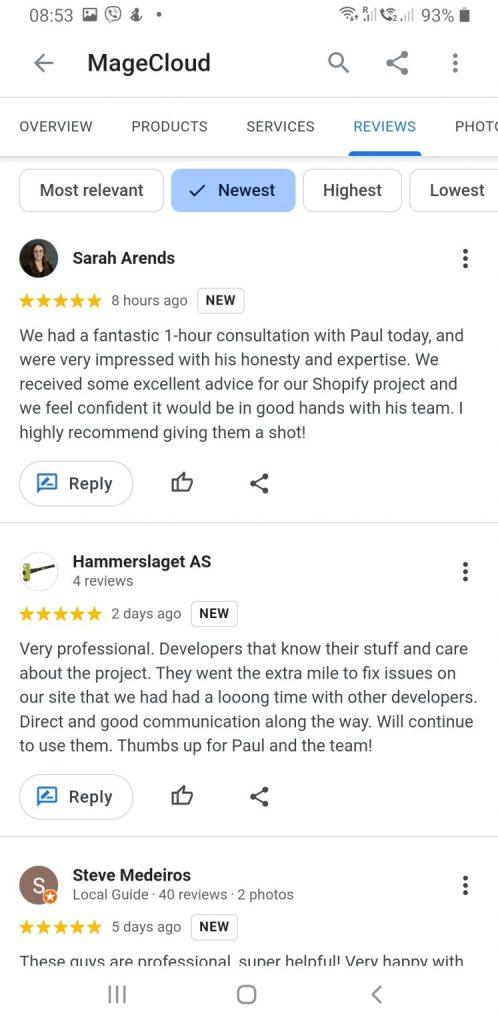
There is one mechanism I attach to the generosity, and I attach it without embarrassment. After every session, I send my clients a link and ask them to check out the reviews and leave their own. That is the entire funnel. Provide the value first, completely and without conditions, then make one small ask that costs the other person two minutes and costs their honesty nothing.
Building your brand and reputation starts with exactly these basics: provide value without expecting anything in return, and keep going. The reviews accumulate, the word spreads, and the people you helped become the proof that the help was real. The same logic runs through why I read every audit request that lands in our inbox, including the ones that look like nothing. The more impact you have on other people’s lives, the better the return on investment you will get on your own. I wrote that sentence on LinkedIn as encouragement, but I mean it as accounting.
The Boundary That Keeps It Sustainable
I want to be honest about the limits, because generosity without a boundary becomes a second job with no salary. The free minutes go to people who are hustling, the ones who arrive with specific questions, who have clearly tried things, who will do something with the answer. Effort earns attention. What the boundary filters out is the other kind of request, the open-ended “pick your brain” with no preparation behind it, the person collecting free consultations the way others collect quotes.
A few minutes is also genuinely a few minutes. The free tier is a look and a pointer: here is the thing that is obviously wrong, here is what I would do first. The full engagement, the deep audit with the verification behind it, remains work, priced as work. Keeping the two tiers distinct is what lets the free one survive. The founders in Silicon Valley who helped me did not run my company for me. They gave me twenty minutes of honest direction, and twenty minutes was enough.
Pass It Forward
If you are established, my suggestion is to fund a small giving-back budget on purpose: a few emails a week answered properly, a short call for the founder who reminds you of yourself at the start. You are gaining something in return, even when the ledger takes years to show it. And if you are the one starting out, with questions and no budget, the door is real. Hit my profile and book an audit through the featured post section, or get in touch. Bring specific questions and the willingness to act on the answers. That is the only currency the free tier accepts, and it was the only one I had when someone first accepted it from me.
Related reading: Twenty Years on LinkedIn, Mostly Wasted. What two decades of unbanked conversations taught me about publishing the value instead.