

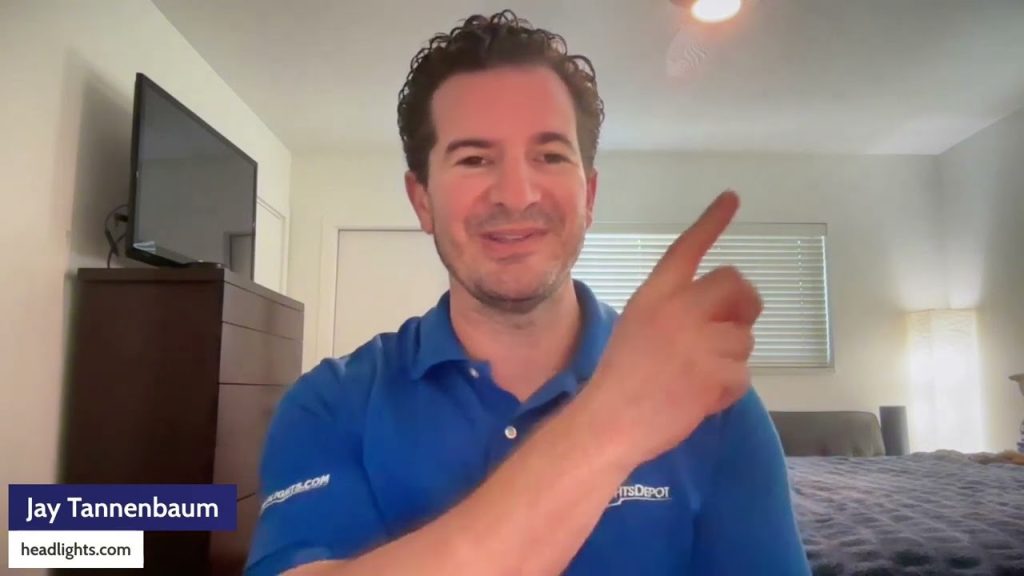
Jay Tannenbaum and his brother Eric have been running their automotive lighting business since 2002. Today it is Headlights.com and Jay is the CEO. He has been working with my team for over a decade, and when he was asked why, he did not talk about our tech stack or our pricing. He talked about what happens when something breaks. That answer is the whole reason this article exists.
The Problem That Brought Them to Us
Before we met, Jay had an agency building their website, and the site kept throwing 503 errors. Nobody could work out why. If you have ever lived through this, you know the pattern: the store goes down, the agency says it is the host, the host says it is the code, and the merchant sits in the middle losing money while everyone investigates.
One of the challenges we had when we found Comerix was that we had an agency helping us build a website and we kept hitting these 503 errors. Couldn’t figure it out. We came across Comerix and Paul and his team, and they solved the problem.
We solved it the unglamorous way, by iterating until the cause was found. There was no clever trick. There was a team willing to keep going until the thing actually worked, which is rarer than it should be.
Ten Years and the Same Project Manager
That was over a decade ago. Comerix now handles all of their development work, and Jay has had the same project manager, Alex, since the day they started. Max leads the development.
I want to be plain about why that matters, because it is easy to skim past. Continuity is not a nice-to-have in ecommerce. A project manager who has been with a store for ten years knows why a decision was made in 2018 that still shapes the checkout today. A new account manager every eighteen months does not. The knowledge either lives in your team or it evaporates, and the merchant pays for the evaporation.
The Real Answer: Nobody Points Fingers
When Jay was asked what he values most, this is what he said, and it is the most useful thing any client has told me.
Other agencies I’ve worked with, they tend to point fingers. They say it’s their fault, and then that person says it’s this guy’s fault. When I tell Alex or Max we have a problem, they’ll go and open the tickets for us. They don’t blame other people. They just take responsibility for it and they help us solve the problem.
Read that again, because it is a damning description of how most agencies operate. The merchant reports a problem and becomes the project manager of their own outage, chasing the host, the theme developer, and the payment provider, translating between three parties who all have an incentive to say it is not them.
Our rule is simple. If a client tells us something is broken, it is our problem until it is fixed, whether or not we caused it. We open the tickets. We chase the third party. We come back with an answer. The client should not have to run the investigation.
Why Accountability Is a Business Model, Not a Personality Trait
People assume this is about being nice. It is not. It is structural.
I run an agency with no contracts and no retainers, which means a client can leave at the end of any month. There is nowhere to hide. If we spent a week blaming the hosting provider while a store was down, we would deserve to lose the account, and we would. Taking ownership is not generosity, it is the only strategy that survives when the client is free to walk away. That is also why clients stay for years without anything holding them there.
It is the same argument I made on the Prophets of IT podcast about processes beating tools. No project management software makes a team take responsibility. The willingness to own a problem you did not create is a process decision, and you either build it into how the team works or you do not have it.
What to Ask Your Agency
If you are choosing a partner, do not ask them what platforms they know. Ask them what happens at 2am when the store is down and it is not obviously their fault. Ask who opens the ticket with the host. Ask how long your project manager will be yours.
Their answer to those three questions will tell you more than any case study, including this one.
Client Case Study
Client: Jay Tannenbaum, CEO, Headlights.com (family business, founded 2002)
Problem: recurring 503 errors a previous agency could not resolve
Fix: iterated until the root cause was found
Relationship: 10+ years, same project manager throughout
What he values most: nobody points fingers
Paul Ryazanov · MageCloud · Comerix · Founder, Ecommerce Camp UK
If your current agency spends more time explaining whose fault it is than fixing it, that is the problem, not the bug. Come and talk it through with founders who have been on both sides at the next Ecommerce Camp.