

Are you an ecommerce business owner running a WooCommerce website on WP Engine or Kinsta? That question opened one of the most productive posts I have written, because it launched a research project we had wanted to run properly for a year: a detailed comparison of WP Engine and Kinsta, their features, their performance, their control panels, measured against the other platforms we manage rather than against marketing pages.
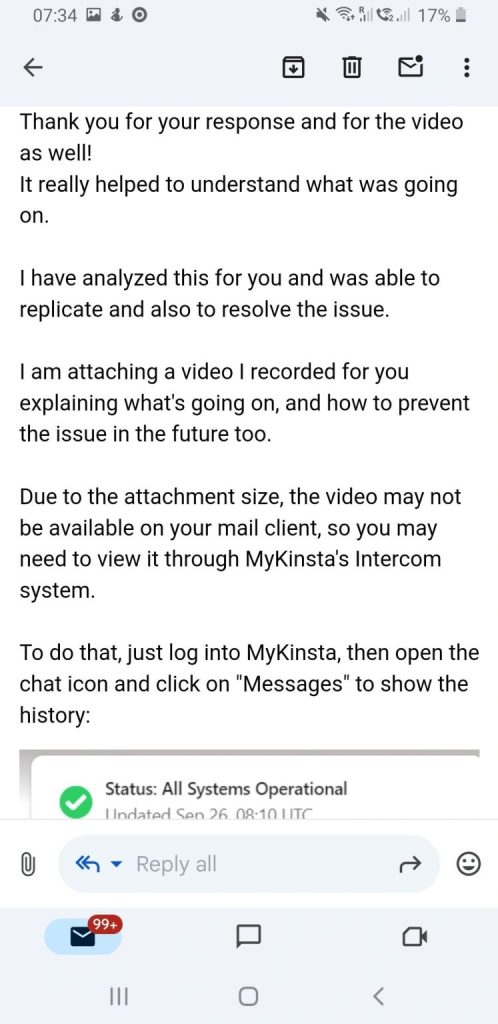
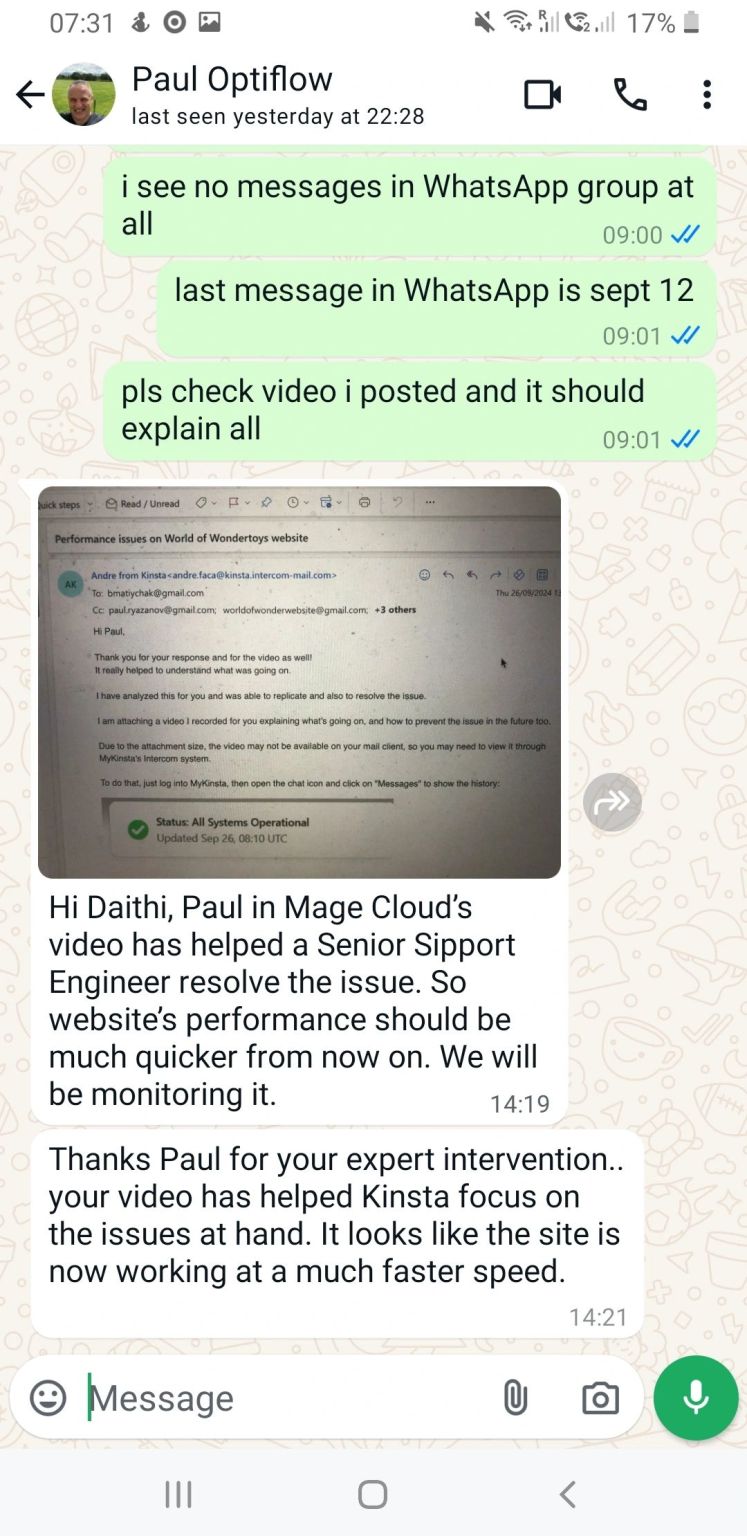
The foundation is real operations. The research includes reviews of two high-traffic sites we manage with a combined audience of over 1.2 million visitors, stores where we see what the platforms do under genuine Q4 load rather than in synthetic benchmarks. The featured image on this post is a flavour of the working material: a Kinsta support thread where a diagnostic video we recorded helped their senior engineer replicate and resolve a real performance issue, confirmed by the client in writing afterwards. That is the texture hosting comparisons never include, what support actually does when a store is slow and the evidence arrives.
MageCloud Research Note
The Project, In Outline
THE COMPARISON
WP Engine vs Kinsta, for WooCommerce
Features, performance, and control panels, compared against other infrastructure we operate, with optimisation opportunities documented.
THE EVIDENCE BASE
1.2M visitors of managed traffic, plus 5 volunteer stores
Two high-traffic stores we run daily, extended by five participating WooCommerce sites audited free in exchange for anonymised use of the findings.
THE TIMING
Built for Q4
The whole point was actionable before Black Friday: fixes a merchant could implement in weeks, not a whitepaper for January.
Paul Ryazanov · MageCloud · benchmarks from stores we actually answer for
What Participants Received for Free
The exchange we offered the five volunteer stores was deliberately lopsided in their favour, because we needed real sites and honest variety. Each participant received UI feedback with actionable tips implementable before Black Friday, a technical audit requiring no backend or admin access, an SEO review of optimisation opportunities, marketing strategy suggestions, and a review of their email marketing flows. Five deliverables, zero invoices, in the video-first format I keep insisting audits should take.
What we asked back: permission to use parts of each audit in the published research, anonymised with identifying details blurred where wanted, with priority given to stores open to sharing their domain publicly for full transparency. For anyone who hesitated, we offered proof up front, screenshots of specific issues we had already uncovered elsewhere, confirmed by both clients and hosting teams. The recurring patterns were the entire reason for the project: we kept seeing the same classes of issue across unrelated WooCommerce stores, and five more data points either confirm a pattern or kill it. Either result improves the research.
Why Hosting Comparisons Need Operators, Not Affiliates
Be honest about the genre this project lives in: most hosting comparisons are affiliate content, written by people who have never carried a store through a Black Friday on the platforms they rank, funded by the referral links at the bottom. The conclusions follow the commissions, the same incentive problem that ruins audit PDFs.
An operator comparison runs on different fuel. We answer for these stores at 2am, as a matter of explicit policy, so our interest in which platform performs is the opposite of theoretical. We know what each control panel makes easy and what it quietly makes impossible, how each support desk behaves when the evidence is a video and the clock is running, and what the bills look like after the promotional year ends, a subject with its own history on this blog. That is the comparison a merchant deciding where to spend Q4 actually needs.
The Standing Version of the Offer
The formal research window closed with its five stores, but the underlying trade never really closes, because the patterns keep needing data and merchants keep needing eyes. If you run a WooCommerce store on WP Engine, Kinsta, or anywhere else, and you want the participant-grade look at it, UI, technical, SEO, and email flows, get in touch. Key findings from the research are being shared publicly, sharing is caring and the community improves when the patterns are named.
And whichever host you choose after reading anyone’s comparison, ours included, keep one principle: the platform is only half the performance story. The other half is whether anybody is watching the boring layers after the migration confetti settles. That half is portable. Bring it with you.