

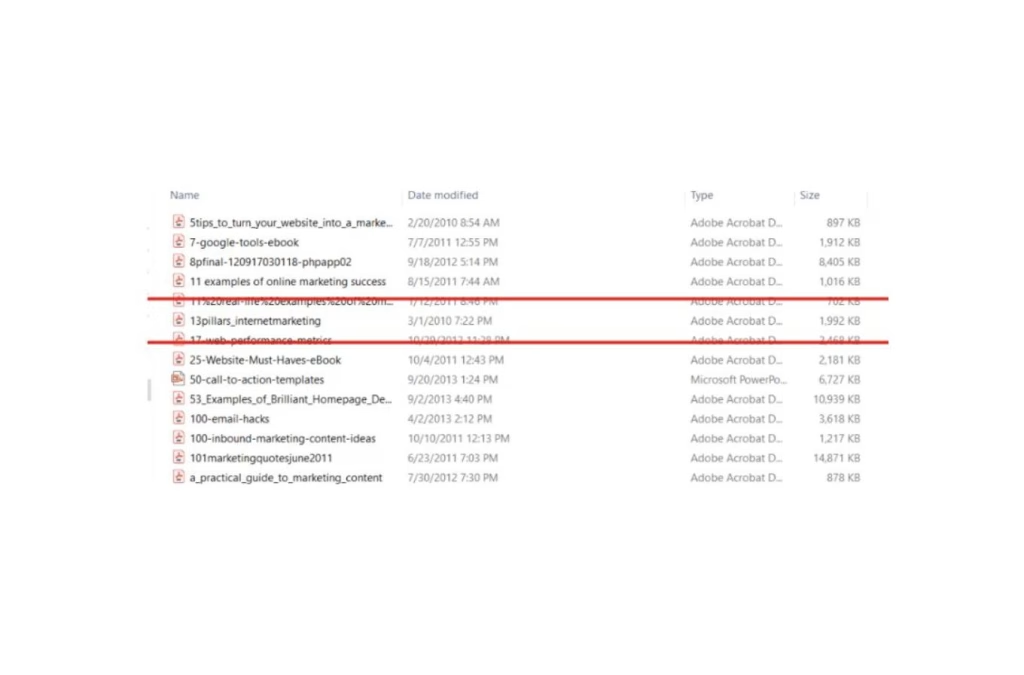
The first real marketing education I ever had did not come from a course, a conference, or a mentor. It came from a folder of scrappy PDFs and eBooks I started collecting before most people had heard of content marketing, and I still carry that folder with me on every laptop I have owned since.
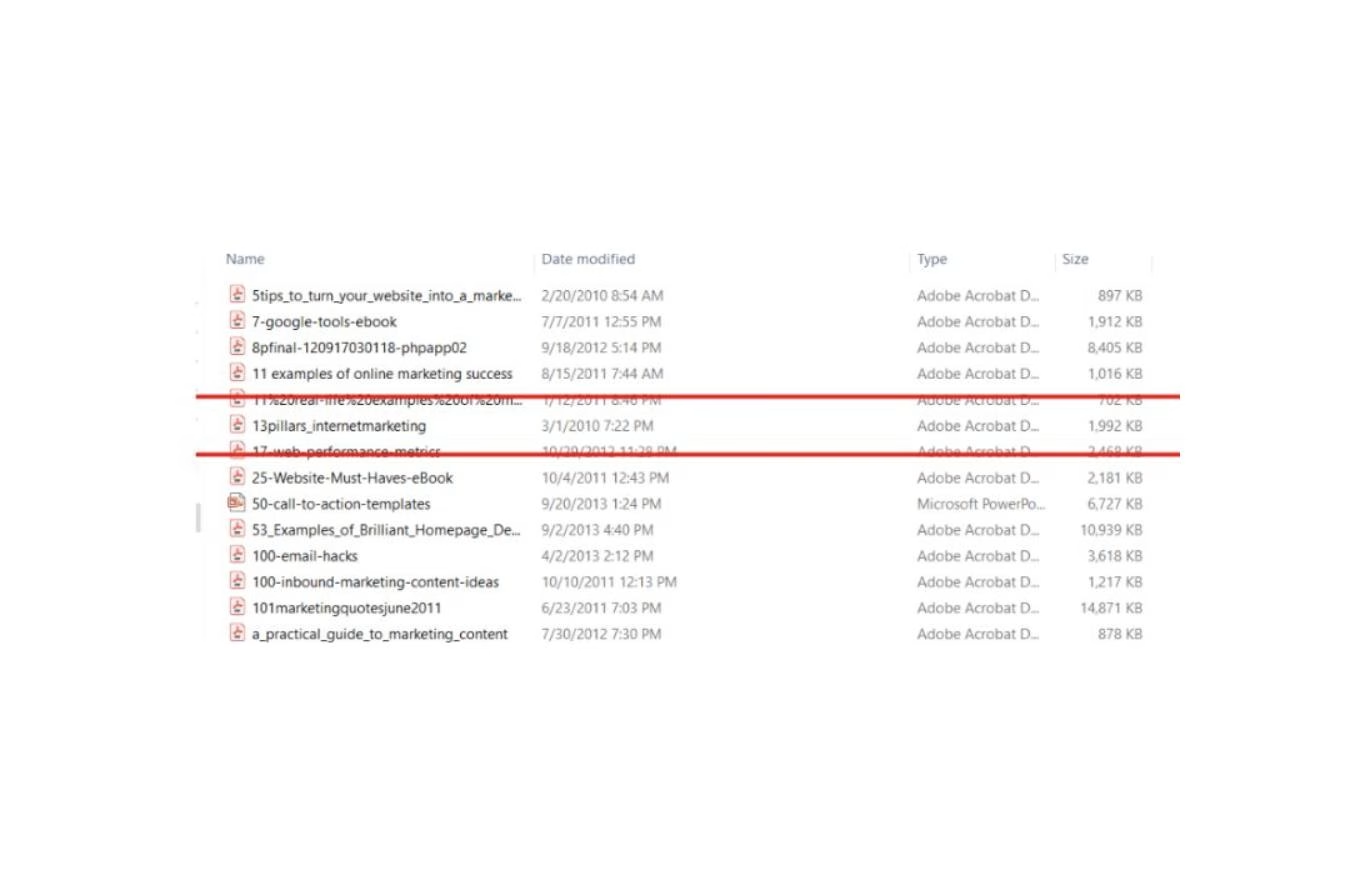
I was about to reply to David Bain on LinkedIn the other day when I opened that folder again and caught myself smiling. I have changed probably five laptops by now. The drive is different. The OS is different. But that folder is the same one I started building in 2010, and the file names still tell the story of how I went from curious to obsessed with online marketing.
Why a Folder of Old PDFs Changed Everything
When I started, there were almost no structured programmes for ecommerce marketing. You could take a general marketing degree, but nothing about how to actually run a Magento store, write product copy that converted, or earn links to a small shop with no brand recognition.
So I did what everyone in my generation of ecommerce operators did. I downloaded every half-decent PDF I could find, read the blogs that published them, and tried to copy what the authors were doing on my own test sites. The folder grew into a strange library of practitioner knowledge: 5 Tips to Turn Your Website Into a Marketer, 7 Google Tools eBook, 11 Examples of Online Marketing Success, 13 Pillars of Internet Marketing, 25 Website Must-Haves, 50 Call to Action Templates, 100 Email Hacks, 101 Marketing Quotes, and A Practical Guide to Marketing Content.
Every one of those titles was a piece of someone else’s hard-won experience. Reading them in order, then trying the ideas out on real stores, is how I learned the craft.
The Book That Actually Got Me Started
Inside that folder, one title kept pulling me back in. It was a short practical guide to marketing content that explained, step by step, how to build a website that earned traffic instead of paying for it. Nothing in it was novel by today’s standards. But in 2010, the idea that a small ecommerce store could compete with bigger brands by publishing better content was not obvious.
Reading that book was the first time I saw marketing as a system rather than a collection of tricks. Write useful content. Make sure Google can find it. Put it in front of the right audience. Measure what happened. Adjust. Do it again.
That loop is the same one I run today at MageCloud, fifteen years and dozens of clients later. The tools have changed. The loop has not.
From Reading Other People’s Ebooks to Building a Community
The uncomfortable truth about those early years is that I learned almost everything in isolation. I did not know other ecommerce operators in my city. I did not have a peer group to stress-test my ideas against. The PDFs in my folder were the closest thing I had to a community.
That is why, years later, I decided to build the thing I wished had existed when I was 22. Ecommerce Camp UK is a free community and event series for anyone who wants to be successful in ecommerce, run by practitioners and backed by the team and partners who make it possible.
Everything at Ecommerce Camp is free because of our partners and mentors. No paywall. No vendor pitches. Just the kind of hands-on, unguarded conversations I used to wish I could have when I was downloading those PDFs alone at night.
What I Would Tell Myself in 2010
If I could send a note back to the version of me who started that folder, it would be three lines.
Do the work in public. Every test I ran privately in 2010 would have earned me readers and relationships if I had written up the results on a blog. The experimentation was the asset. The lessons were the product. I did not understand that for years.
Go to the events that look small. The most useful conversations I have had in my career happened at tiny, low-attendance meetups where the speakers actually knew the audience. The flashy conferences rarely moved the needle. Most big events feel the same precisely because they are optimised for attendance rather than for learning.
Find the people who have done it. The authors of those PDFs were working operators, not theorists. Anyone you can learn from is someone who has already shipped the thing you are trying to ship. That filter is still the best one I know for picking mentors.
Why I Still Keep the Folder
People sometimes ask why I bother migrating those old PDFs forward onto every new machine. Most of them are out of date. Some of the companies that published them no longer exist. I do not read them anymore.
I keep them because they remind me that this craft was taught to me for free by strangers who decided their hard-earned lessons were worth sharing. The folder is my reminder that I owe the same thing back, which is why I put time into mentoring other ecommerce founders and why Ecommerce Camp will stay free for as long as I am running it.
If you are earlier in your ecommerce journey than I am, build your own folder. Save the playbooks that help you. Write up what you learn when you try them. And when someone newer than you asks for help, send them your folder.
If you want to meet other ecommerce founders who are learning the same way, come to the next Ecommerce Camp. It is the room I wish I had walked into in 2010.
Related reading: Why I Cut a Client’s Invoice in Half — the founder mindset that produces the invoicing rules above: built from the same operator habits collected over a decade.
Related reading: Why My Agency’s Business Goal Is Stability, Not Growth — the origin story of the founder habits behind the stability-not-growth answer.
Related reading: I Sold Onions at Twelve. Now I Hire Hustlers. The chapter before the folder: the market stall where the hustle was installed.