

Two companies handled me as a customer this month, and the gap between them is the clearest lesson in customer support I have seen in a long time. One made leaving feel almost impossible. The other answered in a single minute, from a real human, while sirens were going off around them. If you run an ecommerce business, the contrast is worth sitting with, because your support is doing the same thing to your customers that these two did to me.
Why Lock-In Is Not Loyalty
My contract with BT was coming to an end. It was a two-year deal, and BT sent me a physical letter with options to renew. Going through those options, I could not find any way to actually cancel. The deals on offer would simply roll the contract on for another two years automatically. I tried calling, but staying on hold did not feel like a real path to a human. So I went into an EE and BT store to cancel the TV service in person. After about fifteen minutes of verification, I was told the cancellation could not be done in store and had to be done by phone. In total I wasted around forty minutes to get precisely nowhere.
That is not a support experience. It is a maze designed so that leaving is harder than staying. Lock-in like that is sometimes mistaken for loyalty, but it is the opposite. Loyalty is what a customer chooses when leaving is easy. Everything else is just friction, and customers remember friction.
What Real Support Looks Like
Now let me show you the other end of the scale, the support of the monobank app. More than two million people follow it, which for a bank is remarkable on its own. At 7:24 in the evening I sent a message. At 7:25, one minute later, a support person replied. Not a bot. Not an AI. A real human, who answered my questions over the next three minutes.
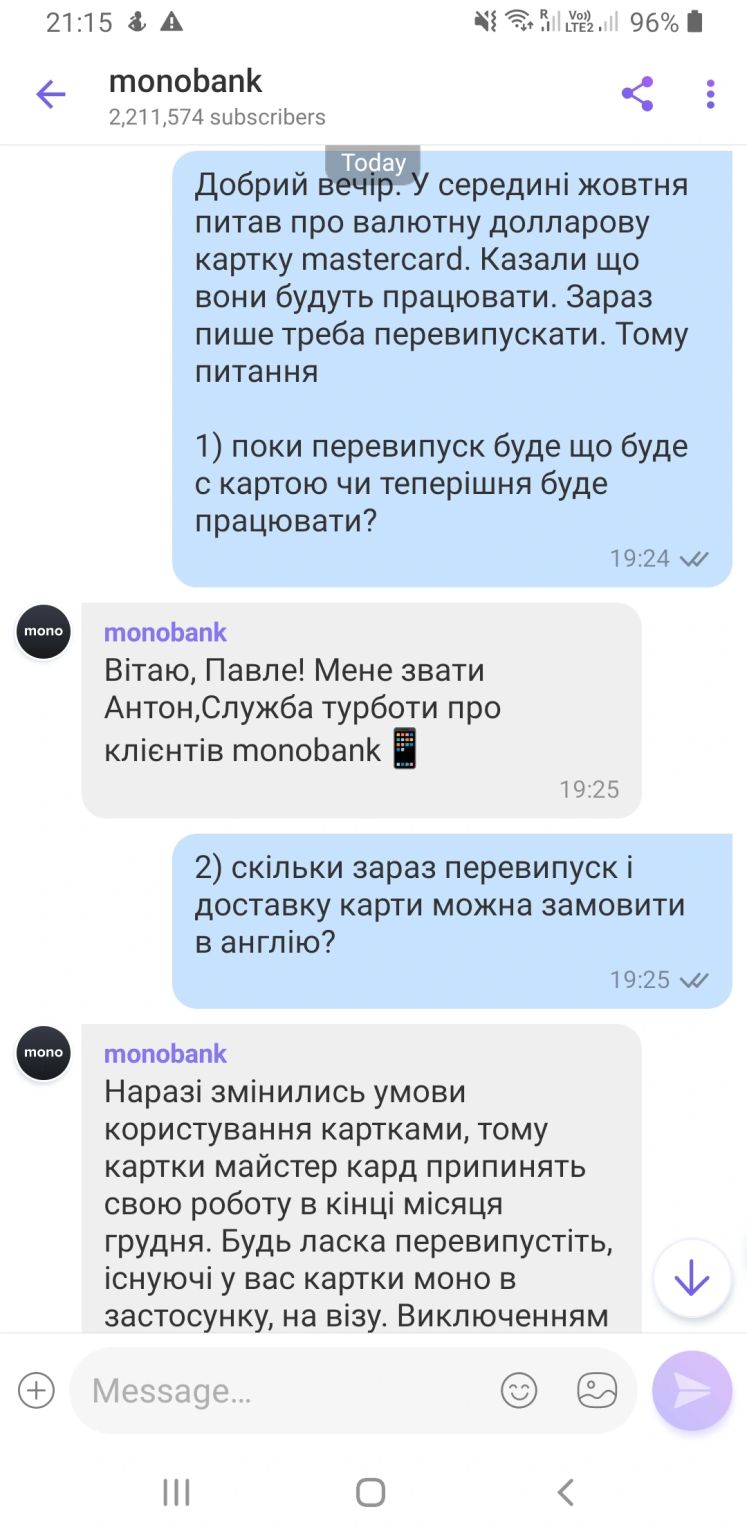
I am sharing these screenshots even though most readers will not be able to translate them, because the timeline tells the story on its own. A message, a reply within sixty seconds, and a real conversation. That is what a customer feels when a company has decided that being reachable is part of the product, not a cost to be minimised.
Support Under Conditions No SLA Covers
Here is the part that puts every corporate support policy in perspective. Partway through helping me, the agent told me there was an air-raid alert in Ukraine and that he had to move to a shelter. A few hours later, once it was safe, he replied again to ask whether I needed anything else.
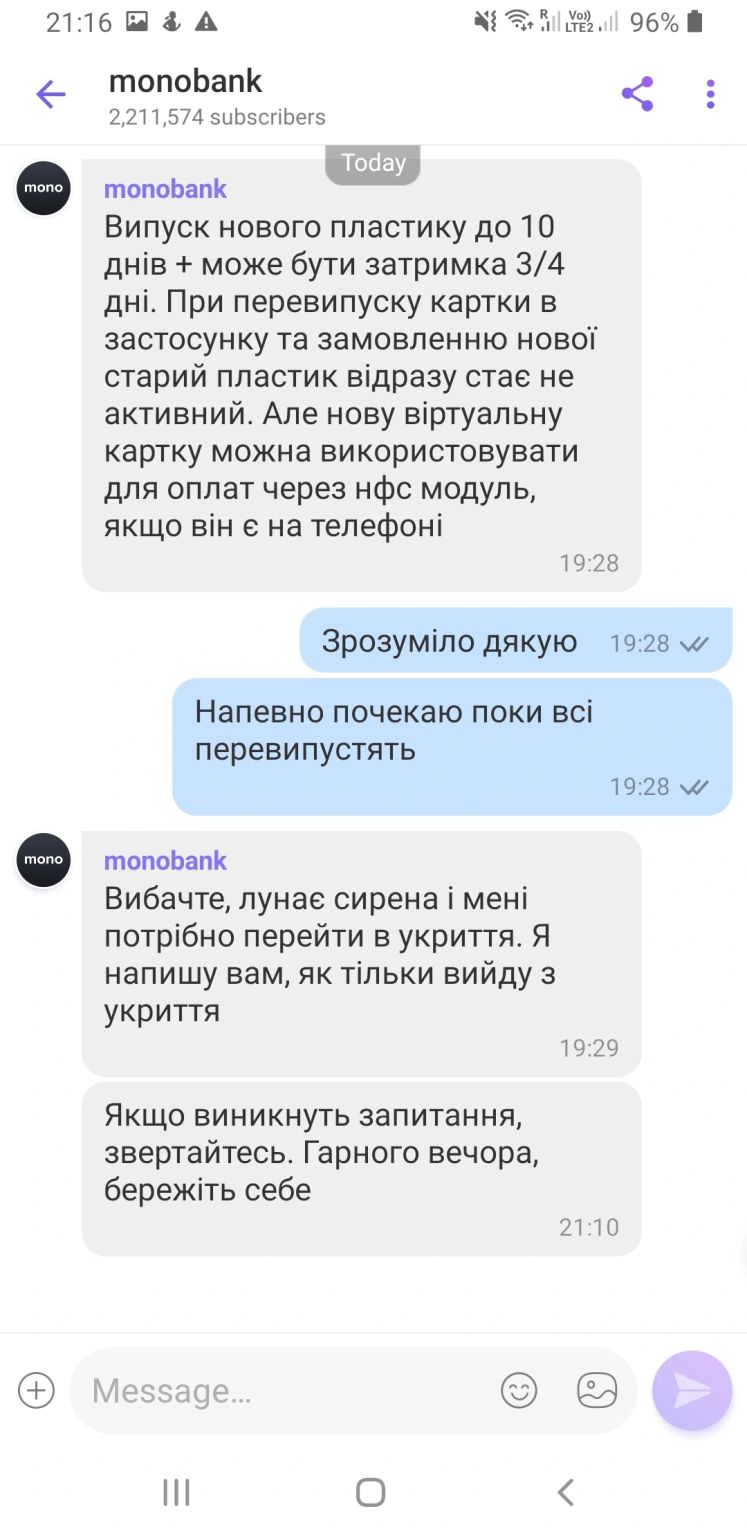
Think about that against forty minutes wasted trying to cancel a TV package in a country at peace. One company, under conditions no service-level agreement could ever cover, still treated the customer like a person. The other, with every advantage, treated the customer like a problem to be contained. The difference is not resources. It is what the company has decided support is for.
What This Means for Ecommerce
The lesson carries straight into ecommerce. Your support is your brand, whatever your marketing says. A customer who cannot reach you, or who gets a bot when they needed a human, learns something about you that no campaign can undo. A customer who gets a fast, human reply learns the opposite, and tells people. I have written about this standard from our own side, in the emergency policy we run across our UK stores and a developer replying from a basement in twenty-four minutes.
So having seen what monobank does, how would you rate the support at BT. And more usefully, how would your own customers rate yours. The honest answer to that second question is worth more than most of what sits in a marketing budget. It is the same reason I argue that good support should open the ticket before the customer even has to.
MageCloud Support Note
Two Support Experiences, One Lesson
BT
40 minutes, no resolution
A renewal letter with no clear way out, and a store that could not cancel.
monobank
One minute, a real human
A reply at 7:25pm to a 7:24pm message, even with sirens overhead.
Paul Ryazanov · MageCloud · support is the brand
If you want an honest look at how your own store’s support feels from the customer’s side, come and find me at the next Ecommerce Camp UK. It is one of the cheapest places to win, and one of the most common places to quietly lose.