

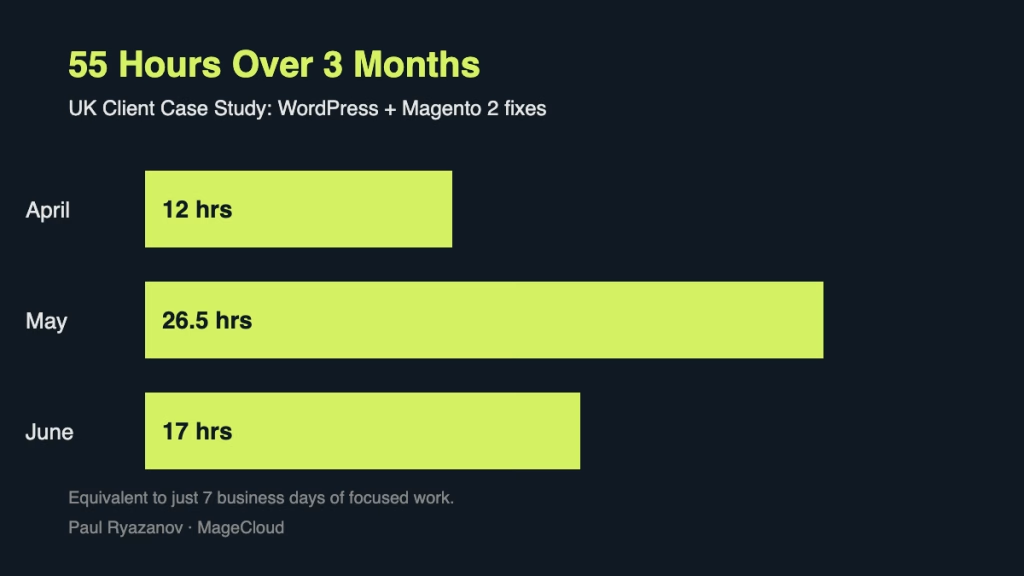
A UK client came to us in April after years of paying a local digital marketing firm to look after their WordPress and Magento 2 stack. They were frustrated. The site had accumulated issues that the previous agency never resolved. The performance was stuck. The conversion rate was flat. The invoices kept coming.
Three months later, we had spent 55 hours in total on their site. That is the equivalent of just seven business days of focused work over a quarter. Most of the original issues were gone, the stack was stable, and the monthly retainer dropped to a maintenance level they had not thought was possible.
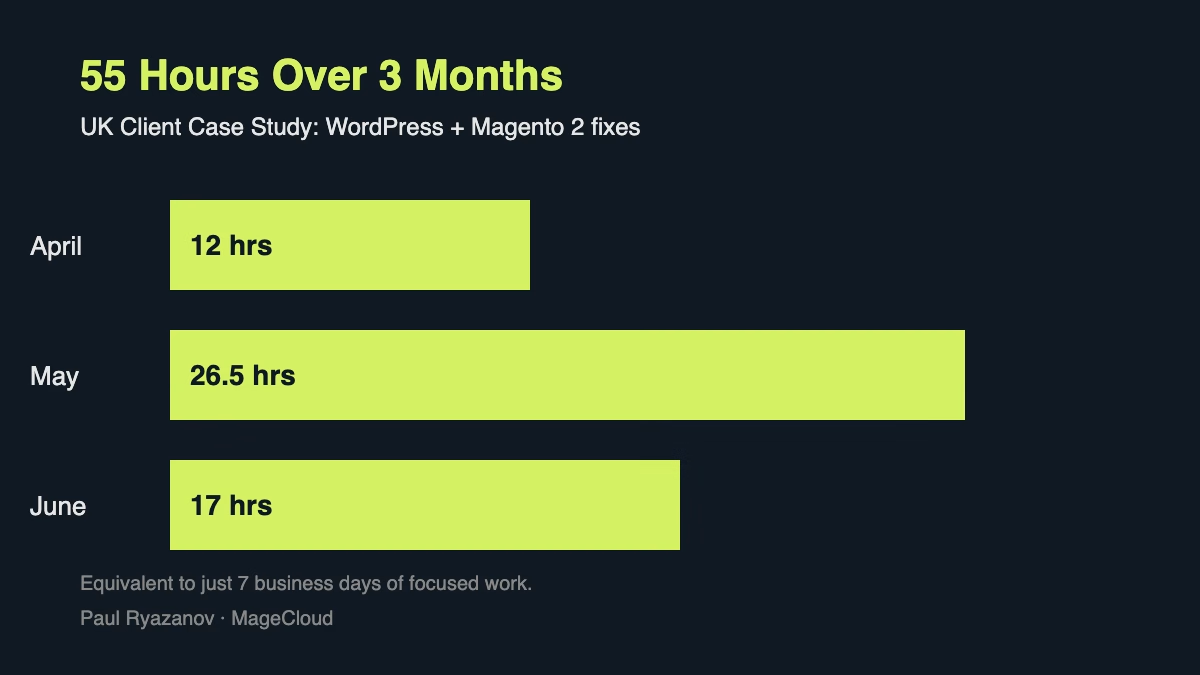
The Shape of the Work Told the Story
Look at the distribution. April was 12 hours. May was 26.5 hours. June was 17 hours. That is not a random pattern. That is what a proper triage-then-fix cycle looks like when someone who knows the platform takes over a neglected site.
April was an audit month. We had to understand what we had inherited. May was the heavy lift. Everything that had been deferred for years had to be addressed, tested, and shipped. June was the settle-down. The critical fixes were live, monitoring was green, and we were mostly reviewing the results and tightening edge cases.
If we had been in this situation on a traditional monthly retainer, the firm before us could have stretched those same 55 hours across a year and still billed every month. That is the trap a lot of ecommerce owners fall into without realising it.
What Seven Business Days of Work Actually Covered
The scope we closed in 55 hours was not small. It covered WordPress and Magento 2, which is two separate stacks with their own patching cycles, their own performance profiles, and their own failure modes.
We applied the outstanding Magento patches. We audited and fixed the most significant Core Web Vitals issues. We cleaned up the broken and orphaned URLs that were draining crawl budget. We moved the store to a host that actually understood Magento, which shaved noticeable time off every page load. We set up automated scans so the next SessionReaper-class issue would not sit undetected. And we did the WordPress side at the same time, because a marketing site with broken Schema and slow TTFB undermines the commerce site it points at.
Why the Previous Agency Could Not Have Done This
I do not think the local firm was lazy. I think they were wrong for the stack. General digital marketing agencies can do a lot of things well. What they cannot usually do is pattern-match on a mid-size Magento 2 store and know within an hour which five issues are actually costing the client money.
That is a specialist skill, built across dozens of similar engagements. When an agency has only touched one or two Magento stores, every problem looks novel. Every fix takes three times longer than it should. And a lot of the right fixes never get attempted because the team does not know they exist.
If you want to know whether your current agency is the right fit for your stack, ask them how many stores like yours they have shipped. Ask for specifics. Not all development agencies are the same, and the gap between a specialist and a generalist is exactly the gap between 55 hours and 500.
What Clients Can Take From This
If you are sitting on a store that feels expensive to maintain and slow to improve, the problem is usually not your budget. The problem is usually that nobody has done a proper audit in a long time, and the work is being spread across too many hours because the people doing it are not pattern-matching fast enough.
Before you sign another six months with your current agency, get a second opinion on the actual scope. A real specialist should be able to walk your site, look at your Google Search Console, glance at your server logs, and within an hour tell you what the five most impactful things to fix are. If they cannot, keep looking.
A Note on Transparency
I share these kinds of time logs intentionally. Ecommerce owners have almost no way to benchmark whether the hours they are paying for are reasonable, and the industry benefits from that lack of visibility. If you have no reference for what 55 hours can cover on a WordPress plus Magento 2 stack, you cannot push back when an invoice says 150.
So take this as a data point. One client, 55 hours, three months, WordPress plus Magento 2, previously mishandled. That is what the work can look like in the hands of a team that knows the platform.
If your Magento or WordPress stack is absorbing more hours than this and you are not sure why, send me a note. I will take a look and tell you honestly whether you need a new partner or whether the hours you are paying for are fair.