

When someone says that Shopify is only for a simple store, I am always ready with one example to show them. It is usually enough to end the argument on the spot. The belief that Shopify is the lightweight, beginner platform, the one you start on and outgrow once you get serious, is one of the most persistent and most outdated ideas in ecommerce.
Where the Myth Came From
The myth had a basis in truth a long time ago. In its early years Shopify really was the simple option, the place to stand up a small store quickly without a developer. That reputation stuck, the way first impressions do, and it has long outlived the reality. People who formed their opinion of Shopify a decade ago are still repeating it as if nothing changed.
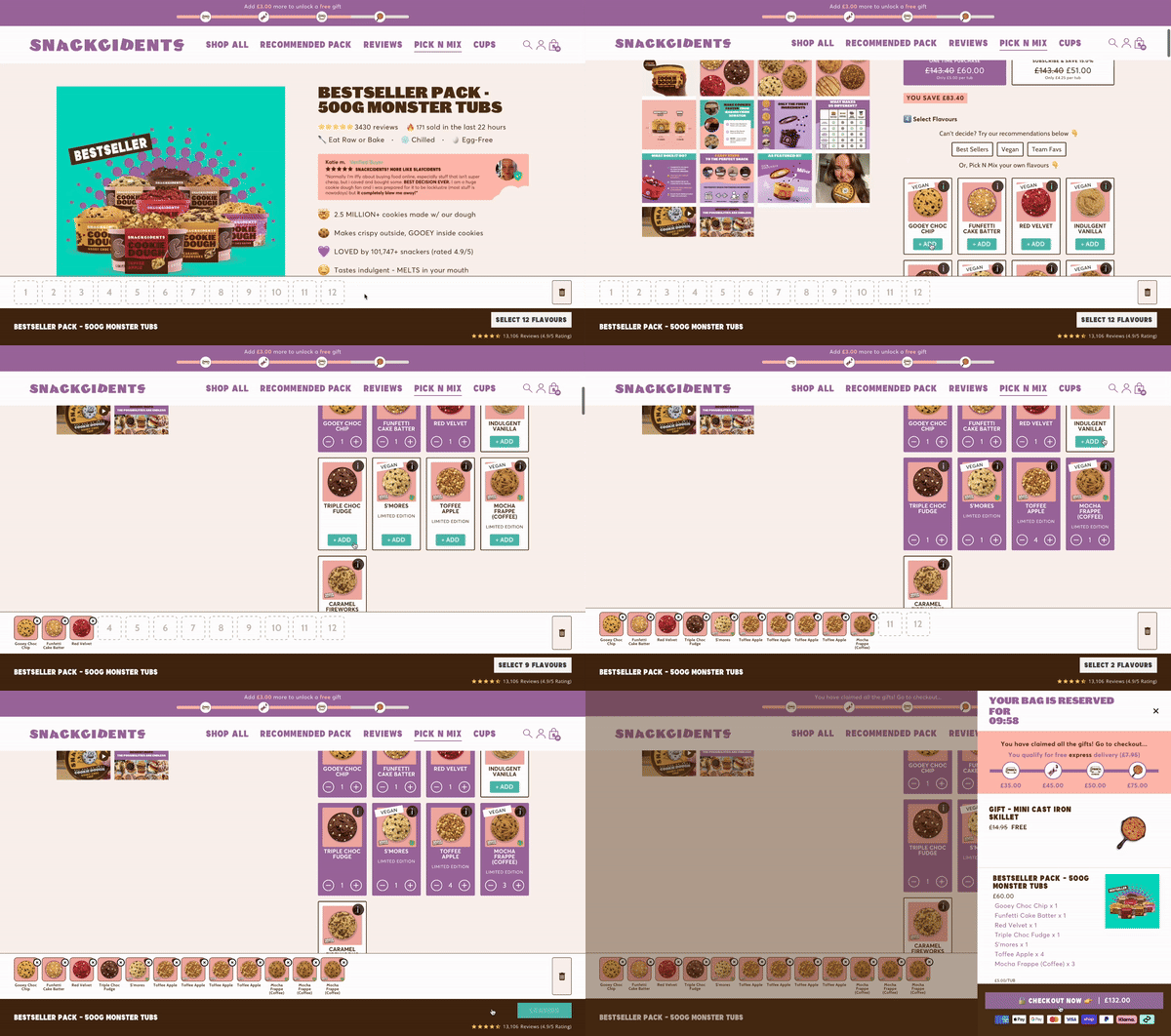
A great deal changed. The platform now runs enormous, complex, high-volume businesses, the kind doing serious revenue with deep catalogues, custom checkouts, international operations, and heavy integration work behind them. The store you see is simple by design, because good ecommerce hides its complexity from the customer. The engineering underneath is anything but.
Why the Myth Is Expensive to Believe
This matters because the belief drives real decisions. A founder convinced that Shopify cannot handle a serious business will avoid it when it might be the right choice, or worse, will replatform away from it at exactly the moment it would have served them best. Platform decisions made on outdated reputation rather than current capability are some of the costliest mistakes I see.
The honest way to choose a platform is to look at what it does today, for businesses your size, not at the reputation it had when you first heard of it. The same care applies in the other direction, which is why I have written what a failed WooCommerce to Shopify migration teaches about SEO and security. A migration done for the wrong reason, or done carelessly, undoes years of work regardless of how capable the destination platform is.
What Actually Decides the Right Platform
Shopify being able to handle complex stores does not make it the right answer for everyone. It makes it a serious candidate that should not be dismissed on a stale assumption. The real decision comes down to your catalogue, your operations, your team, and your budget, not to a label like simple or enterprise. The same is true of the platforms people often hold up as the opposite of Shopify, which is part of why if you are on Shopify, it is worth reading carefully before you act. And it is why I keep arguing that the platform is rarely the ceiling, the same point behind why a store does not need an AWS cluster to be taken seriously.
MageCloud Operating Note
Shopify, Then and Now
THE OLD REPUTATION
The simple, beginner platform
True a decade ago, repeated as if nothing changed.
THE CURRENT REALITY
Complex, high-volume stores
Simple on the surface by design, serious engineering underneath.
Paul Ryazanov · MageCloud · choose on capability, not reputation
If someone has told you Shopify is too simple for your business, or too limited to grow into, get in touch before you make a platform decision around it. I will give you an honest read on whether it fits what you are actually trying to build.