

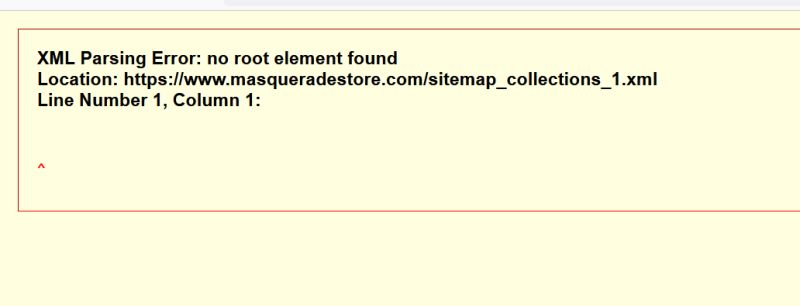
Shopify introduced from and to parameters for its collections and pages sitemaps, a quiet structural change to URLs almost nobody reads. Unfortunately, the new structure was not immediately recognised by Google Search Console, which meant every previously submitted sitemap_collections_1.xml URL broke. The screenshot attached to this post is what stores started seeing: an XML parsing error, no root element found, on a sitemap URL that had worked for years.
Nobody at the affected stores changed anything. Nobody deployed, nobody touched DNS, nobody edited a robots file. The platform moved underneath them, and the first party to notice was Google, which began failing to read sitemaps and posting notices to anyone who looked. The operational takeaway fits in a sentence: you probably want to update GSC with the new collections sitemap URL as soon as possible, because the failure notice is already on its way.
MageCloud Platform Watch Note
What Changed, and What Broke
THE CHANGE
From/to parameters on Shopify sitemaps
Collections and pages sitemaps moved to a new parameterised structure. Routine platform housekeeping from Shopify’s side.
THE BREAKAGE
Old sitemap URLs stopped parsing
sitemap_collections_1.xml started returning parsing errors or 404s. GSC marked submitted sitemaps as Failed.
THE EXPOSURE
Every Shopify store with submitted sitemaps
If your GSC has the old URLs submitted, you are carrying a Failed status right now whether you have noticed or not.
Paul Ryazanov · MageCloud · we read the sitemap notices so the merchants do not have to
Why a Sitemap Failure Is Quiet but Not Harmless
Let me calibrate the severity honestly, because sitemap panic is its own industry. A failed sitemap does not deindex your store. Google retains its crawl knowledge and follows links regardless. For a small catalogue, the practical impact of a few weeks of failed sitemaps rounds to nothing.
The damage profile changes with scale and freshness. Large catalogues, frequent collection changes, new product velocity: the sitemap is how Google discovers your changes promptly rather than eventually. A broken one slows the metabolism of indexation exactly where indexation pays, and it does it silently. I have written about a store whose sitemap was dead for eight months because a cron job missed a migration. This is the same failure class, except the trigger was the platform itself, which makes it more universal and less your fault, while leaving it exactly as much your problem.
The Deeper Pattern: The Platform Moves Without Asking
The instructive thing about this incident is not the sitemap. It is that a managed platform changed shared infrastructure and the change shipped to every store simultaneously, with no action required and no action possible. That is the deal you sign with Shopify and its peers: enormous operational convenience in exchange for living downstream of decisions you learn about from error messages.
The deal is still good. But it obligates a habit I push constantly: check Search Console weekly, specifically the boring panels, sitemaps, coverage, page experience. Platform-induced breakage shows up there first, usually before any human announcement, and the read costs five minutes. Stores that had the habit caught this change inside a week. Stores without it will find a Failed status whenever they next have a reason to look, possibly months from now, wondering how long it has been like that.
What to Do on Your Store Today
The fix is genuinely small, and I published the step-by-step companion piece with the exact options, but the short version: open GSC, look at the Sitemaps section, and check the status of your collections and pages sitemaps. If they show Failed with parsing or 404 errors, you have two choices: wait for Google to pick up the new structure on its own, which it eventually will, or submit the new sitemap URLs manually and close the gap now. For any store where catalogue freshness matters, do the second one. It takes two minutes.
And either way, take the incident as the argument for the standing watch. The next quiet platform change is already scheduled by somebody, and your only notification will be in Search Console. If you want us to be the ones reading it, get in touch. This is exactly the class of thing our clients never have to think about.