

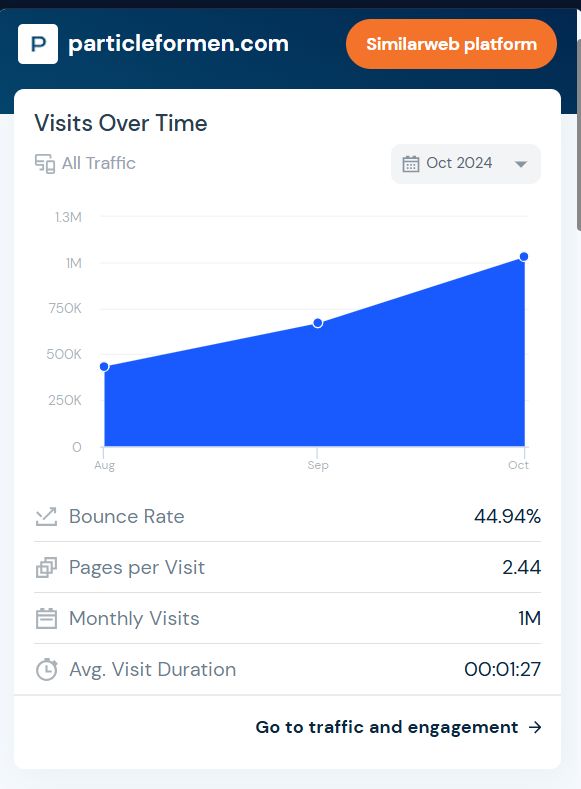
One of our clients hit one million visitors in October, on a website built with WooCommerce. I keep coming back to that number because it quietly contradicts something most people believe. WooCommerce is widely treated as the platform you start on and then outgrow, the one that cannot handle real traffic. A million visitors in a single month, before the Black Friday campaign had even run, says otherwise.
Why WooCommerce Gets Underestimated
WooCommerce carries a reputation for buckling under load. The reputation is not entirely unfair, because a default WooCommerce install on cheap shared hosting will struggle. But that is a hosting and configuration problem, not a platform ceiling. People take a store that was set up badly, watch it slow down, and conclude the platform cannot scale. The platform was never the limiting factor.
The truth is that WooCommerce is just WordPress with commerce on top, and WordPress runs an enormous share of the high-traffic web. What decides whether it scales is everything around it: the hosting, the caching, the database, the way the theme and plugins are built. Get those right and the platform is not the bottleneck. Get them wrong and no platform would have saved you.
What a Million-Visitor Stack Actually Needs
Reaching that kind of traffic without falling over is an infrastructure question. It is the same point I make about over-engineering in the other direction, in why your store does not need an AWS cluster. The goal is a stack matched to the actual load, not the most expensive option and not the cheapest. A WooCommerce store doing a million visitors needs proper managed hosting, real caching, and a database that has been looked after, and that is genuinely achievable on a sensible budget.
This is also why the choice of host matters more than the choice of platform once you are at scale. We did a whole piece of research on this in WP Engine versus Kinsta for WooCommerce, because the managed-hosting layer is where high-traffic WooCommerce stores are won or lost. The platform sets the floor. The stack sets the ceiling.
Why I Would Not Replatform Just for Scale
When a store starts to creak under traffic, the loudest advice is usually to replatform: move to something that is supposed to scale better. Most of the time that is the expensive answer to the wrong question. If the real issue is the stack, you can fix the stack for a fraction of a replatform, and keep the store that already works and ranks. Owning that decision, rather than letting a vendor frame it for you, matters, which is the argument in owning your hosting even when an agency runs it.
I cannot wait to see what November looked like for this client after Black Friday. A million visitors in October was the warm-up, on a platform that was supposedly not built for it.
MageCloud Operating Note
What Actually Decides WooCommerce Scale
THE MYTH
WooCommerce cannot handle real traffic
True only on cheap hosting and a careless build.
THE REALITY
1,000,000 visitors in a month
The right stack, not a replatform, is what carries the load.
Paul Ryazanov · MageCloud · the platform is rarely the ceiling
If you are being told your WooCommerce store has outgrown the platform and needs replatforming, get in touch before you commit. I will tell you honestly whether the platform is the problem or the stack underneath it is.